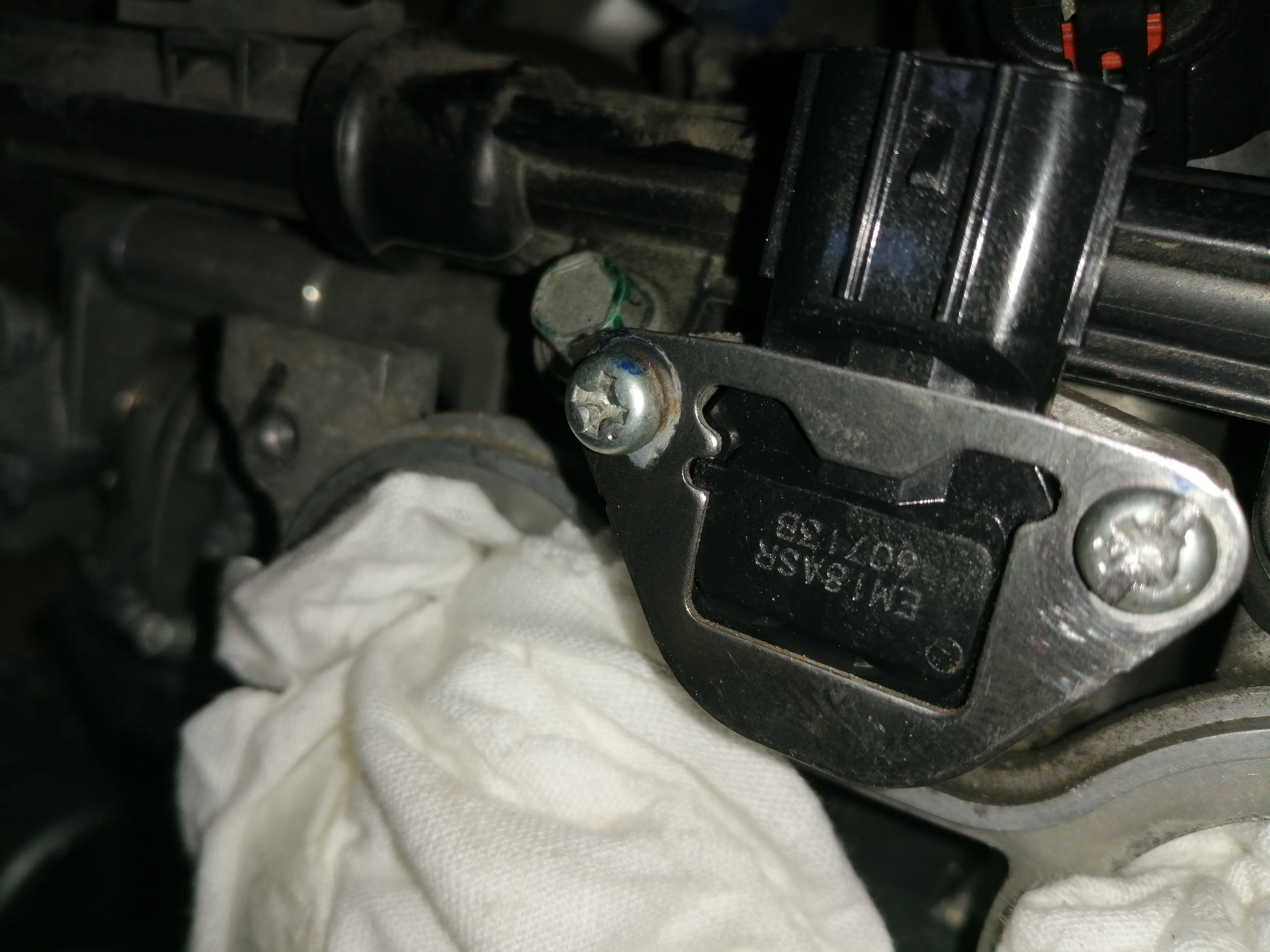
CB1100 Idle speed instability problem

syncronizator_imp said:
MAX,
We will see how IACV works on Saturday.
I'm getting more and more curious.

Backing to :

"One possible explanation could be that the permanent magnets inside the iacv loose strength over time due to the heat"

I wonder why, therefore, a quick reload IACV which is done by turning the ignition key off and on again restores immediately proper engine speed for some time.
Since the engine and the IACV itself does not have enough time to lose high temperature.
Therefore, the magnetic properties of the IACV rotor do not change because the temperature has not changed.

I am already tired today.
I am going to sleep because I have to get up early for work tomorrow.
The good news is that tomorrow morning I will ride a motorcycle again.

Good night to all :)
Pawel this turned out to be a very good question:excited:

At first i thought " youre right, the iacv works fine when cycled again, nothing wrong with the magnetic rotor".

And i did not reply back, however after i woke up this morning things started to fall in place and since we could not yet find something wrong with the iacv but it had to be at fault:exclamation:

So i looked at what the difference is between the startup and run situation, all things were the same xept ( new spelling ) the with of the pulses:idea:, here are two screen grabs of Lord Popguns excellent video, see if you see what i see;


Now compare that with what happens when the engine is warmed up;


To me that looks like a very short pulse compared to what the iacv is designed for:-/

That looks like they have a pulse generator running all the time and take a timeslice to drive the iacv ( turn the driver on for x amount of programmed time ) and do not take the sync of the generator in to account.
So the pulse shape sent to the driver is mutilated because the processor has it's own timing priority together with many other things it controls and slots the iacv in when it feels like.

If the pulse timing is just long enough to make the iacv work normally ( it takes time to rotate the shaft ) the designers would be happy with the result ( although it is a marginal substitute of what the pulse should be ) and put the bike in production; it works, right?:huh:

How many programmers would look at the with of the pulses and decide it is not as the stepper motor is designed for and change the timing effort from "pulses on for x amount of time " to ;
" this many steps " as it should be to make this action reliable rather than " it works ".:sleepy:

And if the software was changed to allow a longer set of pulses, like double the time that would solve the situation a lot i think.

Now for the second part; what would happen if we connect capacitors across the coils?

See how important your reply was? it made me think:clap:
 
Think i know what you mean Speed, to test this you could get the engine up to temperature and idling 1050, disconnect the iacv and go for an extended ride.
With the iacv now " stuck" and not responding your symptoms should appear when slowing to an idle as per usual.

The "check engine light" will be on except when two 100 ohm resistors are connected instead of the iacv coils, and the engine will lose some power when the cel is on if i remember correctly.

Very encouraging to see that you are working all this out on your end.
 
max_imp said:
syncronizator_imp said:
MAX,
We will see how IACV works on Saturday.
I'm getting more and more curious.

Backing to :

"One possible explanation could be that the permanent magnets inside the iacv loose strength over time due to the heat"

I wonder why, therefore, a quick reload IACV which is done by turning the ignition key off and on again restores immediately proper engine speed for some time.
Since the engine and the IACV itself does not have enough time to lose high temperature.
Therefore, the magnetic properties of the IACV rotor do not change because the temperature has not changed.

I am already tired today.
I am going to sleep because I have to get up early for work tomorrow.
The good news is that tomorrow morning I will ride a motorcycle again.

Good night to all :)
Pawel this turned out to be a very good question:excited:

At first i thought " youre right, the iacv works fine when cycled again, nothing wrong with the magnetic rotor".

And i did not reply back, however after i woke up this morning things started to fall in place and since we could not yet find something wrong with the iacv but it had to be at fault:exclamation:

So i looked at what the difference is between the startup and run situation, all things were the same xept ( new spelling ) the with of the pulses:idea:, here are two screen grabs of Lord Popguns excellent video, see if you see what i see;


Now compare that with what happens when the engine is warmed up;


To me that looks like a very short pulse compared to what the iacv is designed for:-/

That looks like they have a pulse generator running all the time and take a timeslice to drive the iacv ( turn the driver on for x amount of programmed time ) and do not take the sync of the generator in to account.
So the pulse shape sent to the driver is mutilated because the processor has it's own timing priority together with many other things it controls and slots the iacv in when it feels like.

If the pulse timing is just long enough to make the iacv work normally ( it takes time to rotate the shaft ) the designers would be happy with the result ( although it is a marginal substitute of what the pulse should be ) and put the bike in production; it works, right?:huh:

How many programmers would look at the with of the pulses and decide it is not as the stepper motor is designed for and change the timing effort from "pulses on for x amount of time " to ;
" this many steps " as it should be to make this action reliable rather than " it works ".:sleepy:

And if the software was changed to allow a longer set of pulses, like double the time that would solve the situation a lot i think.

Now for the second part; what would happen if we connect capacitors across the coils?

See how important your reply was? it made me think:clap:
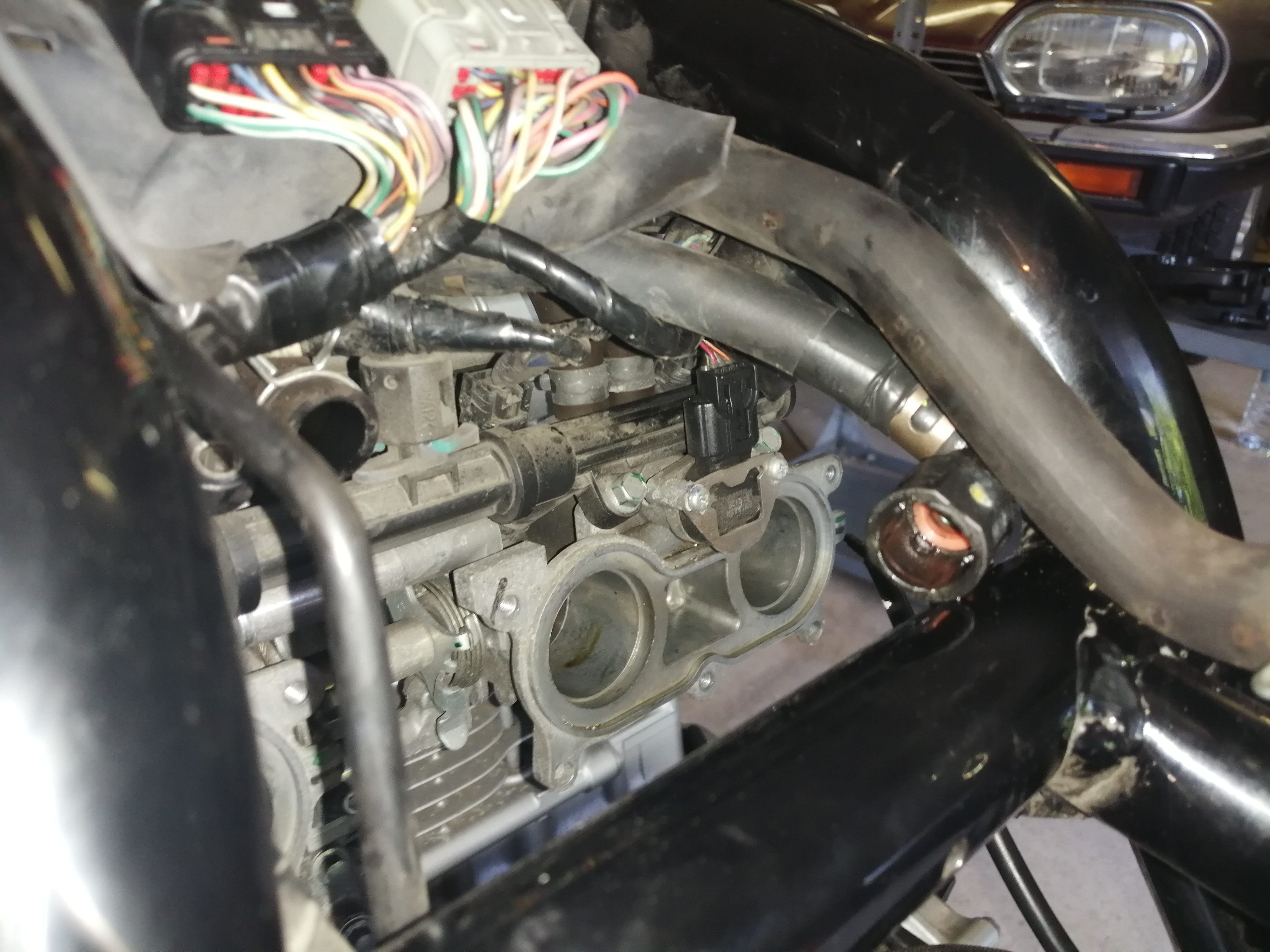
MAX , Speed
I found out how a stepper motor works here from You.
Perhaps my statements do not make sense but ....
I don't know how many pulses the motor need to make one 360 degree turn.
I don't know how many degrees the motor moves during one pulse.
I also don't know if half of the pulse will move the rotor by half of the value (of one full pulse) or maybe nothing.
My imagination tells me that it is like this:
 
max_imp said:
Think i know what you mean Speed, to test this you could get the engine up to temperature and idling 1050, disconnect the iacv and go for an extended ride.
With the iacv now " stuck" and not responding your symptoms should appear when slowing to an idle as per usual.

The "check engine light" will be on except when two 100 ohm resistors are connected instead of the iacv coils, and the engine will lose some power when the cel is on if i remember correctly.

Very encouraging to see that you are working all this out on your end.
With IACV disconnected I am not able to reproduce the issue, but also the engine management probably enters in Limp Mode, Open Loop and does not correct the mixture with the Oxygen Sensors. MIL light appears, idle speed is always stabilized.
syncronizator_imp said:
max_imp said:
syncronizator_imp said:
MAX,
We will see how IACV works on Saturday.
I'm getting more and more curious.

Backing to :

"One possible explanation could be that the permanent magnets inside the iacv loose strength over time due to the heat"

I wonder why, therefore, a quick reload IACV which is done by turning the ignition key off and on again restores immediately proper engine speed for some time.
Since the engine and the IACV itself does not have enough time to lose high temperature.
Therefore, the magnetic properties of the IACV rotor do not change because the temperature has not changed.

I am already tired today.
I am going to sleep because I have to get up early for work tomorrow.
The good news is that tomorrow morning I will ride a motorcycle again.

Good night to all :)
Pawel this turned out to be a very good question:excited:

At first i thought " youre right, the iacv works fine when cycled again, nothing wrong with the magnetic rotor".

And i did not reply back, however after i woke up this morning things started to fall in place and since we could not yet find something wrong with the iacv but it had to be at fault:exclamation:

So i looked at what the difference is between the startup and run situation, all things were the same xept ( new spelling ) the with of the pulses:idea:, here are two screen grabs of Lord Popguns excellent video, see if you see what i see;


Now compare that with what happens when the engine is warmed up;


To me that looks like a very short pulse compared to what the iacv is designed for:-/

That looks like they have a pulse generator running all the time and take a timeslice to drive the iacv ( turn the driver on for x amount of programmed time ) and do not take the sync of the generator in to account.
So the pulse shape sent to the driver is mutilated because the processor has it's own timing priority together with many other things it controls and slots the iacv in when it feels like.

If the pulse timing is just long enough to make the iacv work normally ( it takes time to rotate the shaft ) the designers would be happy with the result ( although it is a marginal substitute of what the pulse should be ) and put the bike in production; it works, right?:huh:

How many programmers would look at the with of the pulses and decide it is not as the stepper motor is designed for and change the timing effort from "pulses on for x amount of time " to ;
" this many steps " as it should be to make this action reliable rather than " it works ".:sleepy:

And if the software was changed to allow a longer set of pulses, like double the time that would solve the situation a lot i think.

Now for the second part; what would happen if we connect capacitors across the coils?

See how important your reply was? it made me think:clap:
MAX , Speed
I found out how a stepper motor works here from You.
Perhaps my statements do not make sense but ....
I don't know how many pulses the motor need to make one 360 degree turn.
I don't know how many degrees the motor moves during one pulse.
I also don't know if half of the pulse will move the rotor by half of the value (of one full pulse) or maybe nothing.
My imagination tells me that it is like this:
MAX , Speed
I found out how a stepper motor works here from You.
Perhaps my statements do not make sense but ....
I don't know how many pulses the motor need to make one 360 degree turn.
I don't know how many degrees the motor moves during one pulse.
I also don't know if half of the pulse will move the rotor by half of the value (of one full pulse) or maybe nothing.
My imagination tells me that it is like this:
In my opinion this last signal is not an issue, if it was the case the problem would be the ECU, and the valve can not move half step, only can move from one magnet to another, the position of the magnets is defining the position of every step. The last signal which is smaller in time only occurs because it just stops the pulse train there. But while engine running at idle speed I don't know why the signals are shorter, anyway it does not seem to be aproblem, the signals from Popgun's video are correct and his bike is working as designed. I am starting today with my IACV replacement!! Your case and Popgun's videos finally triggered me to replace it and leaving the diagnosis as completed. Thanks!
Finally I received the IACV valve, I will replace it as Dave suggested without removing the throttle body which is probably the more compromising operation.

97a13130c37ae7b2471a95cb9abf74f5.jpg


Let's see if I can get it replaced today and give feedback.
 
Thanks Speed.
I keep my fingers crossed for a successful exchange and to solve the problem.
Could you photograph the old IACV and chamber before cleaning it?
It could be useful to see the construction of the chamber.
Is its bottom dirty?
How big is the hole (air gap) which closes the valve (cylinder).
I had no way to see the chamber when the mechanic was exchanging my bikes IACV.


I'm 700km after IACV replacement.... still OK
 
Speed if possible can you also unscrew the old piston, put it in the cylinder and take a picture or video of how it fits inside, in other words;
how much play does the piston have?

With a small piece of wire through the piston it should be simple to pull it back out after the photo has been taken.

And maybe compare if there is a difference in how easy it is to rotate the shaft with the permanent magnets of the old compared to the new iacv.

Recommend taking plenty of pictures to remind yourself how things fit and how cables/hoses are routed and connected, the fueltank breather hose
has it;s own shallow channel just beneath the tank so it does not get pinched and blocked when assembled again and i guess you've seen the
video concerning the fuel hose quick connector from iamheero, a small amount of grease on the pipe makes re-connecting very easy
for the o-ring to slip on.

thanks.
 
Yes I will take those photos. I am removing the rear fender B. Hope this afternoon (after 8 hours from now) I will have the photos.
 
If you let me know when you start i can be wacthing on line closeby if you have any questions.
 
Just gained access to the IACV valve. Quite tricky to remove the inner part of the air filter box, very tight. I was afraid breaking some wire or hose. I am going to move the moustache and after that replacing the Valve.

753d5ed1f1e65f8fe248ce78b67d6065.jpg
 
Yesterday I removed my old IACV looking for coil wiring, magnet or mechanical fault. The housing and the spool of the valve do not show evidence of wear nor any kind of marks

a4aa2740c611ba9e814dc4c5a9c0f2bb.jpg

182364288c75b898e90aae8e6542007a.jpg


I tried heating up the valve (sorry but I don't have the heat gun at home) to check coil resistance when hot. Resistance went up to over 120 Ohm, both coils the same. At the moment of the measure the valve was fuc..ng hot.

eeb6afb2a952ab406418db1135e4c5a6.jpg


The spool of the valve its threaded or bolted on to the rotating axle. When the axle rotates the spool expands or retracts by action of the thread. It is not "one piece", the thread part is mounted over a spring and if you force it both parts can slip in reference to the other, still difficult to say there might be an issue

3a34e5c7c3027697ea311cdebacb9b11.jpg

0a42890424695ef43130aa8c8b8ec402.jpg


I exploded the valve looking inside for metallic build ups and to see the architecture of it

704936e6e38e534a552000982e74ad20.jpg


The coil is clean inside with no metallic build ups

5edf77baaa0e3758218c51384711d0c7.jpg


In order to chech the condition of the magnets in the rotor and the magnetic field intensity I did an induction test which I will show you later

Old IACV supplier reference

c1b0f6a6ac794a658b0fb31ed204c849.jpg


New supplier reference

daad4a2b9509c015e1dd29231ed087c0.jpg

After all the checks I have not found an evidence of failure. Always thought that one of the magnets in the rotor could be weaker than the others thus failing in one of the steps and tyhen not being able to keep on turning in the same direction again. I made and induction test where I could check the whole set of magnetic field intensity and coil wiring


As I said I have not found a fault anywhere, it makes me think of a mechanic failure probably in the spool of the valve, I has two separate bodies joined by a spring and you can turn one in respect with the other if you slightly force it, where the system could loose the real position of the valve and giving a mistaken fuel mixture after that. I want to emphasize that my issue was LOW IDLE, never had high idle issues
 
That is quite an accomplishment speed, thanks a lot for the pictures.
I have always wondered what the iacv looked like inside, you can see the poles inside and the offset of the two coils to produce the different step positions, these steps are very small indeed, can you measure if the rotor has more than two poles with another magnet?

It will be interesting to see the outcome of Pawel's tesrting, you guys have contributed a lot of information!

So it does not look like something is out of alignment by the absence of any scratches, we have never seen any.

What i did notice is that the mounting plate with the two screws only fits correctly one way, when it captures and locks the notch in place and that was correctly mounted in your very first picture labelled "progress so far" so no factory mistake there.

Oh and please don't throw any bits away, we may need to look at them a little closer after the thinking has focused some, how's the moustache? took me a while to figure that one out:D
 
max_imp said:
That is quite an accomplishment speed, thanks a lot for the pictures.
I have always wondered what the iacv looked like inside, you can see the poles inside and the offset of the two coils to produce the different step positions, these steps are very small indeed, can you measure if the rotor has more than two poles with another magnet?

It will be interesting to see the outcome of Pawel's tesrting, you guys have contributed a lot of information!

So it does not look like something is out of alignment by the absence of any scratches, we have never seen any.

What i did notice is that the mounting plate with the two screws only fits correctly one way, when it captures and locks the notch in place and that was correctly mounted in your very first picture labelled "progress so far" so no factory mistake there.

Oh and please don't throw any bits away, we may need to look at them a little closer after the thinking has focused some, how's the moustache? took me a while to figure that one out:D
Hi MAX,
Hi Speed,
Hi all,

My video is here:

Speed was it a play between spule and chamber ?
Was is a lot of space or was it tight?
 
The housing of the valve is quite deep inside and difficult to check. I tried to check the clearance but I couldn't have a very good feedback so I couldn't say. I have started the engine, did the warm up, severeal times from 1st gear to neutral and the idle speed is very stable. Before the replacement it was quite easy to make it fail. First test looks ok, but still have to do some test ride to confirm the issue has dissapeared. The thing is that I couldn't do any check or diagnostic procedure that could point to a failure of any component. It could point to a mechanic failure of the IACV as some members have been stating.

PD: I have made 8 kilometers with start stop driving and everrything OK. By the way, I can not access the spreadsheet, why? I requested access but no answer yet.
syncronizator_imp said:
max_imp said:
That is quite an accomplishment speed, thanks a lot for the pictures.
I have always wondered what the iacv looked like inside, you can see the poles inside and the offset of the two coils to produce the different step positions, these steps are very small indeed, can you measure if the rotor has more than two poles with another magnet?

It will be interesting to see the outcome of Pawel's tesrting, you guys have contributed a lot of information!

So it does not look like something is out of alignment by the absence of any scratches, we have never seen any.

What i did notice is that the mounting plate with the two screws only fits correctly one way, when it captures and locks the notch in place and that was correctly mounted in your very first picture labelled "progress so far" so no factory mistake there.

Oh and please don't throw any bits away, we may need to look at them a little closer after the thinking has focused some, how's the moustache? took me a while to figure that one out:D
Hi MAX,
Hi Speed,
Hi all,

My video is here:

Speed was it a play between spule and chamber ?
Was is a lot of space or was it tight?
Hi MAX,
Hi Speed,
Hi all,

My video is here:

Speed was it a play between spule and chamber ?
Was is a lot of space or was it tight?
That video is clue. It makes sense that after giving throttle my idle speed is very low (valve closes) and little by little it goes to normal (opens step by step) if it does not stall before. Unfortunately still I don't know what is the problem, if this is the normal behaviour of the IACV engine speed should lower after giving throttle... Now I am really lost... I don't understand anything.
 
Speed,

Very interesting and informative pictures. I hope you don’t mind but I copied all of them in case they disappear in the future.

I hope your problem is now resolved and you can enjoy your motorcycle!
 
Pawel thanks for the video, it demonstrates things we have never seen before and is very helpful.

There is some abnormal behaviour with the iacv connected outside the engine,
because the engine is cold at startup the ecu controls the iacv to;

1 retract enough to know it's at the end of the stroke, after that it knows where the iacv is.
2 the ecu then extends about half that amount of steps which is programmed to get the engine to idle at 1500 rpm.
3 the ecu then tries to maintain 1500 rpm by trimming the iacv in or out depending, it chases a set point.
4 as the engine warms up it reduces the rpm's to a programmed " map " of target rpm's until it reaches 1050 rpm.

Like Speed i was expecting the iacv to retract on opening the throttle rather than close it, maybe they programmed it so the throttle is less snatchy or makes the mixture richer, who knows.
But thanks to your video's we now know a lot more about the iacv behaviour, all we have to do is understand it's role in the throttle body.

Pawel if possible at some stage could you do the same thing but with an indicator on the shaft like the copper wire?
Also looking at it sideways makes it difficult to see which way it is moving, something like a piece of electrical tape like a flag would do it with a 45 degree view of it.

Two things i noticed;
1 the pin in Speed's picture seems to protrude ( stick out ) more than seems necessary to guide the piston and;
2 Pawel's piston appears to have a wear mark inside the groove on the bottom at the iacv end.

This is probably not important since the fault went away by replacing the iacv but it just struck me as a bit suspicious.

From what i understand the software inside the ecu was changed in 2014, does this have to do with it and; why is it only happening to a few bikes?

Here is a video clip from "zam's channel" (dl2zam for us hams) in Germany where he removes the iacv housing from a similar throttle body like ours that may help to understand what's going on inside our engines;

His video's are usually an hour or so long so i picked out what could be helpful for us and no, there is no access from the top, the fuel injection is in the way, i tried.

Followed a lot of his very interesting but technical video's.
 
max_imp said:
Pawel thanks for the video, it demonstrates things we have never seen before and is very helpful.

There is some abnormal behaviour with the iacv connected outside the engine,
because the engine is cold at startup the ecu controls the iacv to;

1 retract enough to know it's at the end of the stroke, after that it knows where the iacv is.
2 the ecu then extends about half that amount of steps which is programmed to get the engine to idle at 1500 rpm.
3 the ecu then tries to maintain 1500 rpm by trimming the iacv in or out depending, it chases a set point.
4 as the engine warms up it reduces the rpm's to a programmed " map " of target rpm's until it reaches 1050 rpm.

Like Speed i was expecting the iacv to retract on opening the throttle rather than close it, maybe they programmed it so the throttle is less snatchy or makes the mixture richer, who knows.
But thanks to your video's we now know a lot more about the iacv behaviour, all we have to do is understand it's role in the throttle body.

Pawel if possible at some stage could you do the same thing but with an indicator on the shaft like the copper wire?
Also looking at it sideways makes it difficult to see which way it is moving, something like a piece of electrical tape like a flag would do it with a 45 degree view of it.

Two things i noticed;
1 the pin in Speed's picture seems to protrude ( stick out ) more than seems necessary to guide the piston and;
2 Pawel's piston appears to have a wear mark inside the groove on the bottom at the iacv end.

This is probably not important since the fault went away by replacing the iacv but it just struck me as a bit suspicious.

From what i understand the software inside the ecu was changed in 2014, does this have to do with it and; why is it only happening to a few bikes?

Here is a video clip from "zam's channel" (dl2zam for us hams) in Germany where he removes the iacv housing from a similar throttle body like ours that may help to understand what's going on inside our engines;

His video's are usually an hour or so long so i picked out what could be helpful for us and no, there is no access from the top, the fuel injection is in the way, i tried.

Followed a lot of his very interesting but technical video's.
No problem MAX. Tomorrow morning the engine will be cold again.
I will repeat the test .. and will do a better video.

I would like to correct that what I felt touching the piston .. I said that it was gently stepping back.
When I put the copper wire on the shaft, you could see that it really was 2 moves. First to the right and second to the left.
In fact, the piston shifted forward and backward alternately.

Maybe a defective IACV series was produced and that series was used our in hondas 2014.
Maybe we should compare the VIN of everyone who has this problem.
Maybe we should compare the IACV series NR which is printed on the valve body.
Mine old IACV 31128A
Speed,s old 31012E

Did it also happen in 2015 and 2016?

My mechanic admitted, however, that there is some ECU re-flash procedure.
He said that this is done by unauthorized workshops ... e.g. to remove the speed limit.

I planned to go to Norway this summer through Denmark. There is a virus age now ... but ... if they open borders, I probably will.
Along the way there is the Honda service, which did the upgrade of Wisedum's bike.
In this situation, I would go there and ask to change the software version.
I can also go to the Honda Poland office (not dealers) which is near my working place.
Maybe I can talk to someone form Honda who will get the copy of new image and will forward it to Polish dealers.

I think that... much has been done in this case.
I don't know how many people have this problem right now.
I had a problem for a year ... I read this post and did nothing about it.
Finally, I decided to take the risk that the IACV replacement would change nothing.
Now I have driven 922km since the IACV exchange.
I fell in love with my again :)

Speed .... were you able to drive more kilometers after the IACV exchange?
 
Glad to read of your success today. Since this is a very long thread I will re-post the summary from Post 775, a couple years ago:

It does not seem to be a MAP issue, due to symptoms not matching.

It does not seem to be an EOT issue, per reports in this thread and symptoms not matching

It does not seem to be a TPS issue, due to the recent testing guided by Max. There may have been one or two TPS issues, but not for Dave.

Manual pages 5-74 and 5-75 cover IACV (symptoms seem to match): One check is to listen for the sound of it cycling with key on and stop/run on. There is a caution about cleaning before removal to prevent debris in the IACV passage...therefore, any debris would be a concern to proper operation.

Note the symptoms/fail safe function of all DTC on pages 5-15 and 5-16 of FSM.

In the b&w photo at the bottom of page 5-74, it is not sufficient quality to see any air ports to the sides of the passage. If IACV replaced, without cleaning, an IACV issue may remain.

The IACV is 16430-MJF-D01

The IACV can be tested, per the factory service manual:

IACV testing, per FSM 15-41 & 15-42:

Note: These tests may be done with IACV mounted, by lifting rear of fuel tank and removing right side throttle body cover.

1. After clearing stored DTC, per page 5-14, recheck for stored DTC 29-1. If none, then prior DTC was intermittent.

2. Measure resistance of each of the four wires at the ICAV connector (disconnected, harness side, not IACV side). Continuity to ground should be infinity. If not, the wiring harness has a short to ground.

3. Check continuity to ECM, from disconnected ECM 33 pin to disconnected IACV 4 pin connector
Positions are numbered with locking tab up:

ECM A6 black/yellow to IACV connector postion 1 (left)
A17 black/red, position 2
A16 black/blue, position 3
A7 black/orange, position 4 (right)

4. Measure IACV resistance, (IACV side, disconnected), facing with locking tab up at airbox side (mirror image of connector):
position 4 black/yellow (right)
position 3, black/red
postion 2, black/blue
position 1, black orange (left)
a. black/yellow to black orange (2 outside positions), 99-121 ohms at 77F/25C
b. black/red to black/blue (2 inside positions), 99-121 ohms at 77F/25C
If resistance out of spec, FSM declares IACV faulty

My 2 cents: If IACV and wiring tests good, then if symptoms continue to point to IACV, it may be a piston travel issue or air port issue.

Summary, to date:

Max started a very comprehensive thread on the IACV.

IACV explained

Post 9, Feb 19:

vacuum loss (minor = high idle, major = close to stalling/stalling)
TPS (FSM symptom/fail safe: hard to start cold)
IACV (FSM symptom/fail safe: engine stalls, hard to start, rough idle
EOT (FSM symptom/fail safe: poor acceleration)

DTC 29-1, FSM page 5-16, lists IACV circuit malfunction as "loose or poor contact of IACV connector, IACV or its circuit malfunction".

Otherwise, per the FSM, other sensors failsafe is normal engine operation, this includes MAP, IAT and O2. There is no mass flow sensor or exhaust temp sensor on the CB1100.

The FSM incudes all sensors on pages 5-15 and 5-16.

Symptoms reported are classic for IACV.

The piston not moving as much as the stepper steps would not likely provide a DTC (opinion) and this may be more likely than any other aspect of the IACV operation.

Post 11:

Just glancing at pages 5-15 and 5-16 shows how well the CB1100 will continue to perform with many sensor codes.

If the EOT is wonky, the only issue is hard starting cold.

If the IAT is wonky, default is 95 F.

If TPS is wonky, default is 0 degrees position

If an O2 sensor is wonky, "engine operates normally"

However, if a fuel injector faults, it is time to push: Engine does not start, injector power, pump and ignition shut down in the event of "loose or poor contact of the fuel injector connector-fuel injector or its circuit malfunction"...fail-safe is not just complete failure...it is out of spec parameters.

Post 16:

The "advantage" of purchasing the entire throttle body assembly is that the IACV port would be clean, not warped, with new IACV and new TPS.

...hearing the IACV cycling indicates that the stepper motor is stepping or trying to step. If crud is preventing full operation, it may not sound much different. The ECM has no feed-back regarding actual movement.
 
syncronizator_imp said:
max_imp said:
Pawel thanks for the video, it demonstrates things we have never seen before and is very helpful.

There is some abnormal behaviour with the iacv connected outside the engine,
because the engine is cold at startup the ecu controls the iacv to;

1 retract enough to know it's at the end of the stroke, after that it knows where the iacv is.
2 the ecu then extends about half that amount of steps which is programmed to get the engine to idle at 1500 rpm.
3 the ecu then tries to maintain 1500 rpm by trimming the iacv in or out depending, it chases a set point.
4 as the engine warms up it reduces the rpm's to a programmed " map " of target rpm's until it reaches 1050 rpm.

Like Speed i was expecting the iacv to retract on opening the throttle rather than close it, maybe they programmed it so the throttle is less snatchy or makes the mixture richer, who knows.
But thanks to your video's we now know a lot more about the iacv behaviour, all we have to do is understand it's role in the throttle body.

Pawel if possible at some stage could you do the same thing but with an indicator on the shaft like the copper wire?
Also looking at it sideways makes it difficult to see which way it is moving, something like a piece of electrical tape like a flag would do it with a 45 degree view of it.

Two things i noticed;
1 the pin in Speed's picture seems to protrude ( stick out ) more than seems necessary to guide the piston and;
2 Pawel's piston appears to have a wear mark inside the groove on the bottom at the iacv end.

This is probably not important since the fault went away by replacing the iacv but it just struck me as a bit suspicious.

From what i understand the software inside the ecu was changed in 2014, does this have to do with it and; why is it only happening to a few bikes?

Here is a video clip from "zam's channel" (dl2zam for us hams) in Germany where he removes the iacv housing from a similar throttle body like ours that may help to understand what's going on inside our engines;

His video's are usually an hour or so long so i picked out what could be helpful for us and no, there is no access from the top, the fuel injection is in the way, i tried.

Followed a lot of his very interesting but technical video's.
No problem MAX. Tomorrow morning the engine will be cold again.
I will repeat the test .. and will do a better video.

I would like to correct that what I felt touching the piston .. I said that it was gently stepping back.
When I put the copper wire on the shaft, you could see that it really was 2 moves. First to the right and second to the left.
In fact, the piston shifted forward and backward alternately.

Maybe a defective IACV series was produced and that series was used our in hondas 2014.
Maybe we should compare the VIN of everyone who has this problem.
Maybe we should compare the IACV series NR which is printed on the valve body.
Mine old IACV 31128A
Speed,s old 31012E

Did it also happen in 2015 and 2016?

My mechanic admitted, however, that there is some ECU re-flash procedure.
He said that this is done by unauthorized workshops ... e.g. to remove the speed limit.

I planned to go to Norway this summer through Denmark. There is a virus age now ... but ... if they open borders, I probably will.
Along the way there is the Honda service, which did the upgrade of Wisedum's bike.
In this situation, I would go there and ask to change the software version.
I can also go to the Honda Poland office (not dealers) which is near my working place.
Maybe I can talk to someone form Honda who will get the copy of new image and will forward it to Polish dealers.

I think that... much has been done in this case.
I don't know how many people have this problem right now.
I had a problem for a year ... I read this post and did nothing about it.
Finally, I decided to take the risk that the IACV replacement would change nothing.
Now I have driven 922km since the IACV exchange.
I fell in love with my again :)

Speed .... were you able to drive more kilometers after the IACV exchange?
Only made about 8 Km with start stop driving and the fault did not reproduce. I have to test drive more kilometers. Tomorrow won't rain and I expect to drive more to confirm the repair.
 
Back
Top