Time to grow up: FIM rated helmet choices

Thread starter
Well the FIM guys don't test them because.....nobody races with a modular on. FIM still kind of thinks of itself as a professional sport oriented outfit, so they're not going to turn their testing equipment on any modular helmets and the manufacturers aren't going to pay the absurd amounts of money required to carry out those tests on non-race oriented helmets. That's why systems like SHARP exist. SHARP tests helmets of all varieties, and while their requirements are not altogether as strict as FIM, getting 5 stars on SHARP is a pretty good indicator that you might actually pass FIM. They correlate.

If a helmet has a 5 star SHARP rating, I think it's probably just as good for street riding.
 
The engineer in me is very skeptical that either test standard shines above the other in terms of real-world road-accident outcomes. My guess is that most any brand name helmet that meets either SNELL, ECE/FIM or SHARP is going to have similar injury statistics. Sure, the standards and associated tests are different, but I'd want to see a large data set of accident type and rider outcome as a function of which test standard the helmet was designed to.
 
ECE 22.05

"The ECE 22.05 standard is quite a bit younger than the current DOT standard, and in many ways offers a more comprehensive battery of testing than its American cousin. ECE standards test for safety features that can contribute to avoiding an accident altogether, such as the optical quality of approved face shields, and safety factors not directly related to impact, such as shell rigidity. Unlike the DOT, every ECE 22.05 certified helmet model must actually be tested against the standard by an independent lab before it is available for sale with an ECE sticker.

Average motorcycle crash speeds in Europe are significantly lower than in the United States, and this plays a key influence in the design of ECE impact testing. ECE testing uses a smooth anvil known as a curbstone, which delivers a much lower energy blow than the hemi anvil (used in SNELL and DOT testing). ECE impact tests only consist of a single blow, resulting in a relatively low-energy testing scheme overall. While the DOT and SNELL testing allows a technician to strike a helmet anywhere within a range, ECE tests require the strikes at fixed points. This leaves open the possibility of helmet manufacturers “gaming the system” and beefing up protection at those points to pass an unsafe helmet."

ECE 22.05

PROS:
Standards are actively and thoroughly tested on all helmets sold with ECE certification
Very low peak energy allowable (only 275 g)
Extensive battery of testing for a variety of safety-related features.
Eight head forms for a larger range of testing variables

CONS:
Curbstone anvil and single strike equal very low-energy testing, arguably too low for the higher speeds in the United States
Fixed helmet strike positions make it possible to cheat the impact testing
Head form variety can mean displaced center of gravity during testing, reducing impact energy in tests by up to 20 percent

Helmet Safety Ratings 101 - RevZilla
 
Thread starter
That's a good write up Ferret. What's interesting about ECE and Snell is the complete lack of rotational transition testing. When you consider that the majority of real-world head injuries are attributed to rotational impacts, that's a huge Con that's missing from the list for ECE. I'd have a lot more faith in it if they'd conduct more extensive rotational testing.

Sharp and FIM both do this. FIM because of the higher speeds involved in racing, and SHARP, because their stated goal is to provide testing above and beyond ECE.
 
There is a place in Columbus, Ohio called Iron Pony. It is an motorcyle accessory super store. (MrP you won't be too far from there during the rally). They have just about every helmet you can think of. I have spent 1/2 day in there trying on helmets. All the big names. Every time, I come back to the HJC. It is simply the most comfortable helmet for my head. Couldn't tell you how it rates for weight, noise or any other standard, but I know when I pull on an HJC helmet I say Ahhhh that feels good. If you wear a helmet a lot, and I do, it has to be comfortable. I trust it is safe enough for me, for all but the weirdest of accidents, and that no helmet can guarantee 100% safety.

The worst helmet for comfort I ever put on there was a Schuberth. It lasted about 10 seconds on my head and had to come off.

No matter the rating, if it's uncomfortable, you will never like wearing a particular helmet.
 
I didn't even know about SHARP or FIM until this thread and I find this conversation interesting and technical -- I usually prefer only to read the former and see lots of pictures for the latter. That said, do we have any decent data on the numbers of head injuries to motorcyclists wearing any rated helmet as compared those not wearing a rated helmet or perhaps no helmet at all? I ask because if the risk of sustaining a serious head injury while wearing a Snell-approved helmet is extremely low (I'm not saying it is, I'm assuming it for this question), then how much are you reducing your risk with an FIM or SHARP-rated lid? And are there other factors, like a how a helmet fits on your head, its weight, or even its field of vision, that would reduce the risk of a serious head injury by at least as much as having the FIM or SHARP helmet?
 
Thread starter
I don't know If I can answer those questions directly, but I can tell you WHY I can't answer them (can you tell i'm a career bureaucrat?):

the various testing methodologies, and the helmets that adhere to them are unforunately strongly segregated by region. ECE and FIM are firmly planted over in the EU. they have a completely different helmet market over there. You still get ECE ratings on pretty much all good helmets sold in the US, but the ECE ratings are secondary pursuits. Snell is something that is almost exclusively tested for in North America, and it's whole philosophy of testing is different as a result. Again, the helmets we use over here are built for a different market because of this. SHARP is just a british government thing.

The result of this is that the scientific waters are badly muddied. You might say there are more or less fatalities of permanent brain injury with Snell or ECE helmets, but the data is corrupted, because those statistics are segregated by region. Riders in the EU and riders in the US are completely different animals with completely different training and completely different attitudes. Any difference in fatality statistics would be worthless scientifically because of this. There is, however, a whole lot of science out there on the most common causes of death in motorcycle accidents.

". Seventy-five percent of all fatal motorcycle accidents involve head and brain injury, with rotational forces acting on the brain the primary cause of mortality. Current motorcycle helmets are reasonably effective at reducing head injuries associated with blunt impact. However, the mechanism of traumatic brain injury is biomechanically very different from that associated with focal head injury." -- John D. Lloyd, PHD/CPE.

I'm putting that quote up there because the standards and practices of North American safety testing organizations (Snell, DOT) are so radically different from European testing (ECE, SHARP, FIM) that you can draw a clear line on this one issue: Rotational Inertia. The number one type of impact that causes fatality or permanent injury to the head/neck is utterly ignored by Snell and DOT. It's not a huge leap to conclude that helmets designed to mitigate this issue are going to most often serve to prevent serious injury or death. This speaks to your question by saying that helmets that focus on stopping rotational Inertia from getting to the brain/neck (FIM/SHARP) are less likely to be found on the heads of people who suffer traumatic brain injury/death. I can see how that's not the most conclusively scientific viewpoint, but I think it's all we've got until helmet construction and standards becomes a whole lot less regional.
 
There is a reason that MANY road racer wear an Aria helmet , the company does not pay them to my knowledge . Look at the crashed helmets in the Aria files and you will see why people buy them. Of course we are not racers but sometimes the streets are even more dangerous than a circuit.
 
misterprofessionality_imp said:
I don't know If I can answer those questions directly, but I can tell you WHY I can't answer them (can you tell i'm a career bureaucrat?):

the various testing methodologies, and the helmets that adhere to them are unforunately strongly segregated by region. ECE and FIM are firmly planted over in the EU. they have a completely different helmet market over there. You still get ECE ratings on pretty much all good helmets sold in the US, but the ECE ratings are secondary pursuits. Snell is something that is almost exclusively tested for in North America, and it's whole philosophy of testing is different as a result. Again, the helmets we use over here are built for a different market because of this. SHARP is just a british government thing.

The result of this is that the scientific waters are badly muddied. You might say there are more or less fatalities of permanent brain injury with Snell or ECE helmets, but the data is corrupted, because those statistics are segregated by region. Riders in the EU and riders in the US are completely different animals with completely different training and completely different attitudes. Any difference in fatality statistics would be worthless scientifically because of this. There is, however, a whole lot of science out there on the most common causes of death in motorcycle accidents.

". Seventy-five percent of all fatal motorcycle accidents involve head and brain injury, with rotational forces acting on the brain the primary cause of mortality. Current motorcycle helmets are reasonably effective at reducing head injuries associated with blunt impact. However, the mechanism of traumatic brain injury is biomechanically very different from that associated with focal head injury." -- John D. Lloyd, PHD/CPE.

I'm putting that quote up there because the standards and practices of North American safety testing organizations (Snell, DOT) are so radically different from European testing (ECE, SHARP, FIM) that you can draw a clear line on this one issue: Rotational Inertia. The number one type of impact that causes fatality or permanent injury to the head/neck is utterly ignored by Snell and DOT. It's not a huge leap to conclude that helmets designed to mitigate this issue are going to most often serve to prevent serious injury or death. This speaks to your question by saying that helmets that focus on stopping rotational Inertia from getting to the brain/neck (FIM/SHARP) are less likely to be found on the heads of people who suffer traumatic brain injury/death. I can see how that's not the most conclusively scientific viewpoint, but I think it's all we've got until helmet construction and standards becomes a whole lot less regional.
When you say that the primary concern is “stopping rotational inertia”, this isn’t entirely clear to me. So let me ask to make sure:
we are looking for helmets which during any type of accident “will not force your head to twist or turn around any axis”, or ... keep induced torque minimal or zero, correct ?
If this is what is meant, wouldn’t this imply that all it takes to build such a helmet (or find and buy it) is to make sure that it’s as round and flush as possible. In other words ... all the complicated testing for impact might not be so important after all ?
 
One cannot conclude that a particular helmet would not stop (or reduce) rotational inertia simply because those helmets were not tested to the FIM or SHARP standard, though. And even if a helmet was tested by FIM or SHARP and did not pass, we cannot conclude that the helmet does not reduce rotational inertia to the point where there would be a statistically insignificant difference in safety to the user. We would need to know the degree to which any tested helmet reduces the rotation so maybe there would be a scale, say of 0-100 with 100 being the perfect score and 80 being "passing" by FIM. Is the difference between a helmet that scored 60 or 79 and one that scored 100 significant in terms of safety.

I hope this doesn't come off as argumentative. That is not my intent. Nor is my intent to criticize in any way the testing processes that any of these organizations use. In fact, and I may have said this in my last rant, I'm glad that there are different testing methodologies and I suspect that I would like to see my helmet meet or exceed the standard of each of them. In the end, though, I guess I'm wondering if there's a great deal of difference between an Arai that has the FIM approval along with Snell and ECE or an Arai that only carried the latter two.

Has to Dr. Lloyd's quote, was he only talking about riders who were wearing helmets?
 
j3gq_imp said:
misterprofessionality_imp said:
I don't know If I can answer those questions directly, but I can tell you WHY I can't answer them (can you tell i'm a career bureaucrat?):

the various testing methodologies, and the helmets that adhere to them are unforunately strongly segregated by region. ECE and FIM are firmly planted over in the EU. they have a completely different helmet market over there. You still get ECE ratings on pretty much all good helmets sold in the US, but the ECE ratings are secondary pursuits. Snell is something that is almost exclusively tested for in North America, and it's whole philosophy of testing is different as a result. Again, the helmets we use over here are built for a different market because of this. SHARP is just a british government thing.

The result of this is that the scientific waters are badly muddied. You might say there are more or less fatalities of permanent brain injury with Snell or ECE helmets, but the data is corrupted, because those statistics are segregated by region. Riders in the EU and riders in the US are completely different animals with completely different training and completely different attitudes. Any difference in fatality statistics would be worthless scientifically because of this. There is, however, a whole lot of science out there on the most common causes of death in motorcycle accidents.

". Seventy-five percent of all fatal motorcycle accidents involve head and brain injury, with rotational forces acting on the brain the primary cause of mortality. Current motorcycle helmets are reasonably effective at reducing head injuries associated with blunt impact. However, the mechanism of traumatic brain injury is biomechanically very different from that associated with focal head injury." -- John D. Lloyd, PHD/CPE.

I'm putting that quote up there because the standards and practices of North American safety testing organizations (Snell, DOT) are so radically different from European testing (ECE, SHARP, FIM) that you can draw a clear line on this one issue: Rotational Inertia. The number one type of impact that causes fatality or permanent injury to the head/neck is utterly ignored by Snell and DOT. It's not a huge leap to conclude that helmets designed to mitigate this issue are going to most often serve to prevent serious injury or death. This speaks to your question by saying that helmets that focus on stopping rotational Inertia from getting to the brain/neck (FIM/SHARP) are less likely to be found on the heads of people who suffer traumatic brain injury/death. I can see how that's not the most conclusively scientific viewpoint, but I think it's all we've got until helmet construction and standards becomes a whole lot less regional.
When you say that the primary concern is “stopping rotational inertia”, this isn’t entirely clear to me. So let me ask to make sure:
we are looking for helmets which during any type of accident “will not force your head to twist or turn around any axis”, or ... keep induced torque minimal or zero, correct ?
If this is what is meant, wouldn’t this imply that all it takes to build such a helmet (or find and buy it) is to make sure that it’s as round and flush as possible. In other words ... all the complicated testing for impact might not be so important after all ?
When you say that the primary concern is “stopping rotational inertia”, this isn’t entirely clear to me. So let me ask to make sure:
we are looking for helmets which during any type of accident “will not force your head to twist or turn around any axis”, or ... keep induced torque minimal or zero, correct ?
If this is what is meant, wouldn’t this imply that all it takes to build such a helmet (or find and buy it) is to make sure that it’s as round and flush as possible. In other words ... all the complicated testing for impact might not be so important after all ?
The term "rotational inertia" doesn't make any sense in this context. The FIM tests contemplate somebody rolling around on the ground after they crash the bike. As the rider is rolling around, their head is repeatedly bashing around hitting the ground. This argues for a softer shell that absorbs the impacts while you are rolling around so that it doesn't get transmitted to your brain. There is little likelihood in this scenario, unless you hit a big rock while rolling around, that you'll have some huge high-g impact, where a harder shell would be better. The analogy here is that your head is like an egg, and the last thing you want to do is to stick an egg into a hard shell container and shake it around a bunch.

The Snell tests contemplate you bashing your head very hard repeatedly against the same rock or other hard object (or maybe more realistically, hitting something very hard once.) This argues for a hard shell so that the full g-force impact doesn't make it fully to your head. The analogy here is that you are going to hit the container with the egg with a hammer. A hard shell container would protect the egg, and the soft shell container would allow the force to be transmitted to the egg, cracking it.

"Rotational Intertia" is mass*radius^^2. It's a scalar quantity that depends on the mass, and where the moment of inertia is located relative to the axis of rotation. It's not something that a helmet shell can change.
 
Thread starter
I think the point of the tests is to prove that less of that force is transferred to your brain/neck, which is, as you'd said, something that a harder less flexible helmet does a worse job at. The point that I was making about the difference between the two standards is that scenario A in your post is far more likely to happen, given real world statistics. Scenario B can happen, but it requires you to sacrifice your protection from scenario A. Since B is a lot less likely, the more flexible helmets focused on dispersion is more likely to save your egg.

This addresses MTCs question too, by saying you can assume that the snell helmet does that worse, because it's properties protect against heavy direct blunt force instead. The real crux of the problem is that these criteria are sort of opposed to eachother. You cant meet or exceed all of them, because being better at one inherently makes you worse at the other.

As far as his quote, I took a browse again and didn't find any reference to occurances with no helmet.
 
EmptySea_imp said:
One cannot conclude that a particular helmet would not stop (or reduce) rotational inertia simply because those helmets were not tested to the FIM or SHARP standard, though. And even if a helmet was tested by FIM or SHARP and did not pass, we cannot conclude that the helmet does not reduce rotational inertia to the point where there would be a statistically insignificant difference in safety to the user. We would need to know the degree to which any tested helmet reduces the rotation so maybe there would be a scale, say of 0-100 with 100 being the perfect score and 80 being "passing" by FIM. Is the difference between a helmet that scored 60 or 79 and one that scored 100 significant in terms of safety.

I hope this doesn't come off as argumentative. That is not my intent. Nor is my intent to criticize in any way the testing processes that any of these organizations use. In fact, and I may have said this in my last rant, I'm glad that there are different testing methodologies and I suspect that I would like to see my helmet meet or exceed the standard of each of them. In the end, though, I guess I'm wondering if there's a great deal of difference between an Arai that has the FIM approval along with Snell and ECE or an Arai that only carried the latter two.

Has to Dr. Lloyd's quote, was he only talking about riders who were wearing helmets?
I thought that was a well thought out post. Without knowing the "difference " besides pass and fail how do you make an informed decision. And if the fail point is 80 out of 100, and one helmet passes with an 81 and one fails with a 79. How much difference is there really?
 
Thread starter
These are all questions we have to ask. Helmet safety is a nasty tangled ball of yarn. When they're asking you to pony up $800 to purchase that safety it demands you ask all the hard questions and be extremely skeptical about everything. One of the possible outcomes of this post is me learning that all presumption of enhanced safety and value is imaginary, and that I might as well keep wearing $150 buckets.

But its interesting you bring up the pass/fail scenario. SHARP actually doesn't do that. They rate everything from 0-5 stars.
 
misterprofessionality_imp said:
These are all questions we have to ask. Helmet safety is a nasty tangled ball of yarn. When they're asking you to pony up $800 to purchase that safety it demands you ask all the hard questions and be extremely skeptical about everything. One of the possible outcomes of this post is me learning that all presumption of enhanced safety and value is imaginary, and that I might as well keep wearing $150 buckets.

But its interesting you bring up the pass/fail scenario. SHARP actually doesn't do that. They rate everything from 0-5 stars.
At least they offer a zero score.
 
Thread starter
So, Today I spent some time on the phone with several helmet manufacturers. Arai, Shoei, and AGV. Some crushing conclusions were reached that make me feel like an idiot, and leave me more than little angry at the whole politically motivated market manipulation going on in the US helmet market. Here's the Q & A that I put in front of the representative on the phone from each of these companies, which they answered fully to my surprise.

Q: What are all safety standards that your helmet meets when sold in the United states? (Arai Corsair X, Shoei X14, AGV Pista GP R)
Arai: Snell 2015 and DOT
Shoei: Snell 2015 and DOT
AGV: FIM Homologated, ECE22.05 and DOT


Q: Is your helmet (Arai Corsair X, Shoei X14, AGV Pista GP R) the exact same model that was FIM Homologated when sold in the United States?
Arai: no. the Corsair X sold in North America has not been tested and is not the exact same construction/materials used on the RX-7V in Europe
Shoei: no. The X14 sold in the US is not the same X14 sold in the Euro market. The version sold in the US has only ever passed DOT and Snell 2015 (the crappy one)
AGV: YES. an AGV Pista GP R is the same no matter what country you purchase it from. However, they are still not stamped with FIM approval when sold in the US.


Q: Can I buy the European version of the helmet in the United States?
Arai: no. No official distributor is allowed to ship the helmet to your US address
Shoei: We do not sanction it but some distributors operate on Ebay. European market Shoei helmets have not passed DOT and would be illegal to use in the United states
AGV: n/a

Q: Do you or will you market any ECE 22.06 helmets in the US?
Arai: no. 22.05 only
Shoei: no. 22.05 only
AGV: see above

Conclusions:

We here in the United States simply aren't allowed to have the majority of the world's best helmets. The reason for this is Helmet manufacturers are afraid to market an ECE22.06 or FIM helmet here because it will not have a Snell badge, so they re-engineer their helmets to make the shell more rigid so that it passes, at minimum, snell 2015, change the name, and market an inferior product here. The one and ONLY exception is the monstrously expensive AGV Pista GP R, which costs between 1400 and 1700 Freedom Bucks. They market the same helmet anywhere, and don't give two toots about Snell. That's wonderful, but there's no way i'm going to spend that much. Helmets like the Shoei X14 and Arai Corsair X are just riding the reputation of their more authentic counterparts sold in Europe and Asia, without actually delivering the same construction and materials. Instead, what you get when you pay top dollar are helmets that **might** be as good as an FIM or ECE 22.06 helmet, but we'll never know. We'll never know because they'll never be tested on any other format than ECE 22.05 and Snell.

So, what is a boy to do? buy an essentially untested helmet for top dollar and have faith that it's "just as good" or go with what you know? the only thing i can scientifically prove is the safest helmet on the market in the USA are helmets with a Snell 2020 stamp. I may not have as much faith in snell, but I can't help but conclude that I have more faith in an inferior testing system than i do in a helmet that's untested. So, i've decided to settle on the idea that in the USA, i'm simply not going to get the real thing. I have to buy something that's just..."good enough." with that conclusion in mind, i'm going to go buy a Shoei RF1400 today. Comfort, quality, moderate weight, and as much safety as i can scientifically prove in the US. it leaves a bad taste in my mouth, but it is what it is.

le sigh.

 
Considering you're making this move from a $30 thrift store helmet it is still a significant upgrade. Glad to see you found one that you at least like if not love.
 
You can always have someone purchase a helmet for you in Europe and ship it over to the States as "a gift" and then you fake the DOT stamp and that's it

'14 CB1100 STD 5 speed
 
misterprofessionality_imp said:
So, Today I spent some time on the phone with several helmet manufacturers. Arai, Shoei, and AGV. Some crushing conclusions were reached that make me feel like an idiot, and leave me more than little angry at the whole politically motivated market manipulation going on in the US helmet market. Here's the Q & A that I put in front of the representative on the phone from each of these companies, which they answered fully to my surprise.

Q: What are all safety standards that your helmet meets when sold in the United states? (Arai Corsair X, Shoei X14, AGV Pista GP R)
Arai: Snell 2015 and DOT
Shoei: Snell 2015 and DOT
AGV: FIM Homologated, ECE22.05 and DOT


Q: Is your helmet (Arai Corsair X, Shoei X14, AGV Pista GP R) the exact same model that was FIM Homologated when sold in the United States?
Arai: no. the Corsair X sold in North America has not been tested and is not the exact same construction/materials used on the RX-7V in Europe
Shoei: no. The X14 sold in the US is not the same X14 sold in the Euro market. The version sold in the US has only ever passed DOT and Snell 2015 (the crappy one)
AGV: YES. an AGV Pista GP R is the same no matter what country you purchase it from. However, they are still not stamped with FIM approval when sold in the US.


Q: Can I buy the European version of the helmet in the United States?
Arai: no. No official distributor is allowed to ship the helmet to your US address
Shoei: We do not sanction it but some distributors operate on Ebay. European market Shoei helmets have not passed DOT and would be illegal to use in the United states
AGV: n/a

Q: Do you or will you market any ECE 22.06 helmets in the US?
Arai: no. 22.05 only
Shoei: no. 22.05 only
AGV: see above

Conclusions:

We here in the United States simply aren't allowed to have the majority of the world's best helmets. The reason for this is Helmet manufacturers are afraid to market an ECE22.06 or FIM helmet here because it will not have a Snell badge, so they re-engineer their helmets to make the shell more rigid so that it passes, at minimum, snell 2015, change the name, and market an inferior product here. The one and ONLY exception is the monstrously expensive AGV Pista GP R, which costs between 1400 and 1700 Freedom Bucks. They market the same helmet anywhere, and don't give two toots about Snell. That's wonderful, but there's no way i'm going to spend that much. Helmets like the Shoei X14 and Arai Corsair X are just riding the reputation of their more authentic counterparts sold in Europe and Asia, without actually delivering the same construction and materials. Instead, what you get when you pay top dollar are helmets that **might** be as good as an FIM or ECE 22.06 helmet, but we'll never know. We'll never know because they'll never be tested on any other format than ECE 22.05 and Snell.

So, what is a boy to do? buy an essentially untested helmet for top dollar and have faith that it's "just as good" or go with what you know? the only thing i can scientifically prove is the safest helmet on the market in the USA are helmets with a Snell 2020 stamp. I may not have as much faith in snell, but I can't help but conclude that I have more faith in an inferior testing system than i do in a helmet that's untested. So, i've decided to settle on the idea that in the USA, i'm simply not going to get the real thing. I have to buy something that's just..."good enough." with that conclusion in mind, i'm going to go buy a Shoei RF1400 today. Comfort, quality, moderate weight, and as much safety as i can scientifically prove in the US. it leaves a bad taste in my mouth, but it is what it is.

le sigh.
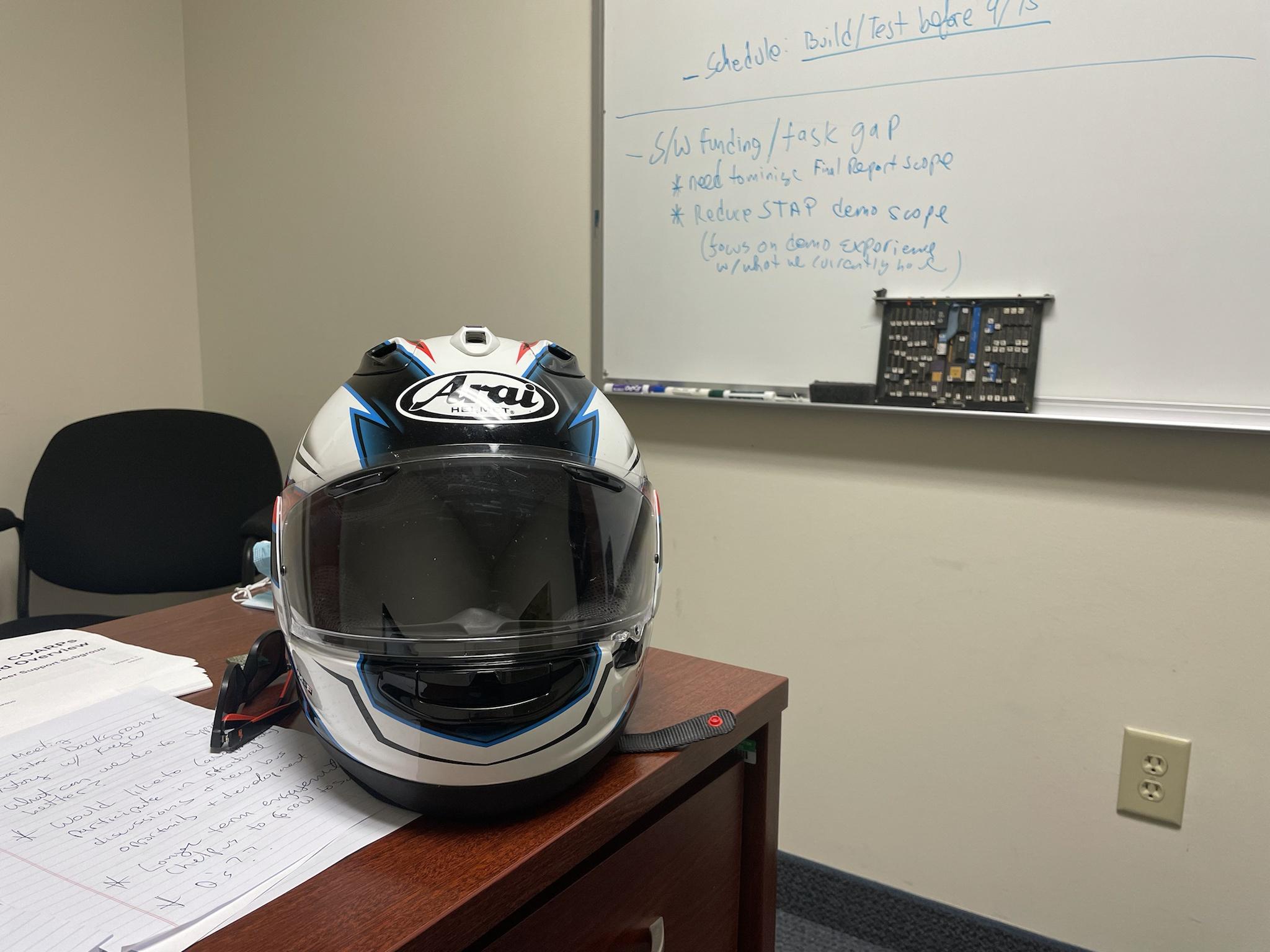
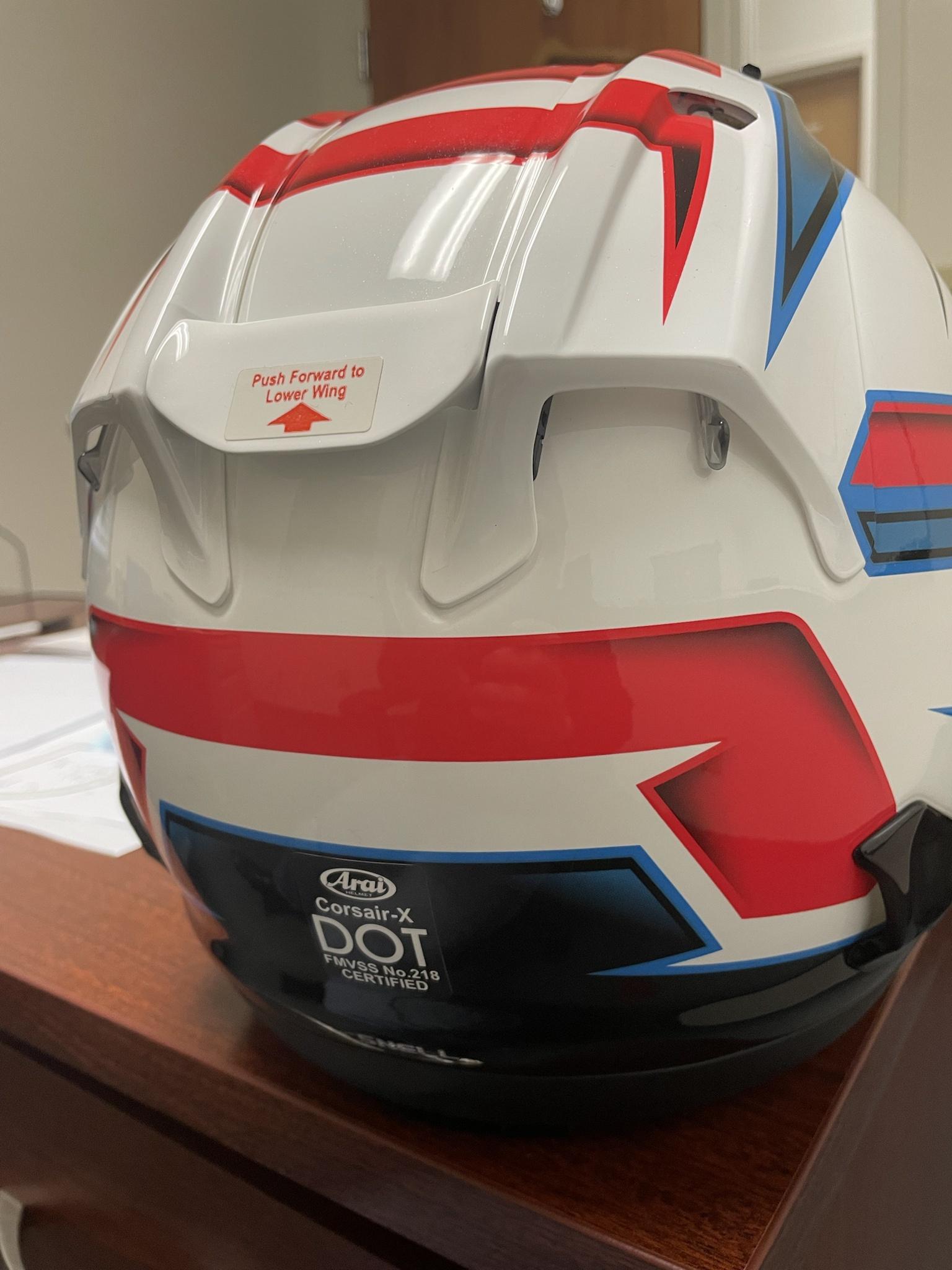
Good on you for making the calls MP!!! Great and definitive info! I agree with the consensus here though that there may not be a real world difference in terms of protection...and while FIM "sounds" like it should be more realistic, the SNELL testing may actually be better at preventing catastrophic injury than FIM (while maybe not being as good at minimizing non catastrophic injury.) Who knows??? But as I sit here this afternoon at the office, with my CorsairX at my desk, I'm pretty comfortable with it on the ride home this evening...

899d6e5861a494d8549ec79ee870a9d8.jpg


5491e5474e363b155a9eced147ddc41b.jpg
 
Back
Top