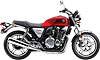
When I first purchased my CB1100EX, the motorcycle setup was absolutely perfect. I was able to ride for extended periods without any back pain, shoulder pain, or fatigue. The stock seat was comfortable. I was able to actuate the clutch, shifter, and brakes without any problems. And then the Tik-Toker incident occurred; everything changed for me.
The first thing I did when I left rehab was to mount my motorcycle. It was still comfortable, but the damage to my shoulder prevented me from extending my arm as I had done in the past. I also shrank a bit, literally losing a few inches of height. I still do not understand the physics of it, but eventually the physical therapist simply told me “You lost a couple of inches. Time to let it go because they are never coming back.” The hip and pelvis fractures also caused me to sit slightly differently on the motorcycle, too. My perfect setup was no more.
To reclaim the motorcycle, I ultimately decided I needed to raise the handlebars and pull them back slightly. I toyed with the notion of replacing the handlebars, but I decided that the cabling issues associated with a handlebar swap were too much. More importantly, I liked the stock handlebars and wanted to keep them.
I share this personal, slightly embarrassing story with you because other Members of the Forum may also be facing physical challenges like mine. Whether it is arthritis, injury, or the natural aspects of aging, our size and posture can change as we age. I hope this post may help anyone who is working through something similar or simply wants a slightly more neutral riding position than what a stock setup allows for. Handlebar risers are worthy of consideration.
As I began my research, I quickly learned that handlebar risers are not nearly as regulated as other motorcycle components. Because the handlebars and mounts are so key to handling and safety, I wanted a pair that had been certified by a credible source, were made of the finest materials, and fit the aesthetic of a CB1100. I found my risers in Germany. Here is a link:
https://www.motea-shop.com/en_us/handleb...6eN-LyXWSK
The Motea Risers were ABE Certified and capable of the performing well in a crash scenario. You can always count on the Germans for great engineering:
![[Image: WOFG8dO.jpeg]](https://i.imgur.com/WOFG8dO.jpeg)
![[Image: ooY6wXu.jpeg]](https://i.imgur.com/ooY6wXu.jpeg)
![[Image: 10IeAfW.jpeg]](https://i.imgur.com/10IeAfW.jpeg)
I was a little nervous installing the risers because I did not want to damage the most beautiful gas tank I have seen on any vehicle. To channel that angst, I compensated by focusing on details. Here is what I did:
Step 1: I staged the risers and assembled the tools I needed to complete the installation:
![[Image: 5Drazlq.jpeg]](https://i.imgur.com/5Drazlq.jpeg)
Step 2: I covered the gas tank with a furniture blanket:
![[Image: iGEmNII.jpeg]](https://i.imgur.com/iGEmNII.jpeg)
Step 3: I loosely secured the handlebars to the motorcycle with ROK Straps:
![[Image: wuGeNzh.jpeg]](https://i.imgur.com/wuGeNzh.jpeg)
![[Image: F80xCx1.jpeg]](https://i.imgur.com/F80xCx1.jpeg)
Step 4: I removed the top portion of the stock handlebar riser:
![[Image: fbOqxpW.jpeg]](https://i.imgur.com/fbOqxpW.jpeg)
Step 5: I cleaned the nasty gunk I uncovered by gentling sanding it with a 120-grit sanding block and then using rubbing alcohol to remove the residue:
![[Image: p2P6Crg.jpeg]](https://i.imgur.com/p2P6Crg.jpeg)
![[Image: jnqRymW.jpeg]](https://i.imgur.com/jnqRymW.jpeg)
![[Image: N2vGLBP.jpeg]](https://i.imgur.com/N2vGLBP.jpeg)
![[Image: m5XV1Tz.jpeg]](https://i.imgur.com/m5XV1Tz.jpeg)
Step 6: I attached the new handlebar risers. Note that the torque setting for the bolts is 23 nM (I love hearing the click of torque wrench

)
![[Image: vwvhQDg.jpeg]](https://i.imgur.com/vwvhQDg.jpeg)
![[Image: QhH18y8.jpeg]](https://i.imgur.com/QhH18y8.jpeg)
![[Image: e5LUt4K.jpeg]](https://i.imgur.com/e5LUt4K.jpeg)
![[Image: NBw00Zq.jpeg]](https://i.imgur.com/NBw00Zq.jpeg)
Step 7: I checked all the cables and made sure that everything had the proper clearance. I also “turned” the handlebars far left and far right to make sure there was nothing restricting movement.
![[Image: BZ0KzkK.jpeg]](https://i.imgur.com/BZ0KzkK.jpeg)
Step 9: I measured from the RLETs to the floor on both sides of the handlebar to make sure everything was level:
![[Image: UaiIihc.jpeg]](https://i.imgur.com/UaiIihc.jpeg)
Step 8: My most crucial step was to reach out to an industry expert: The Ferret. I asked for guidance about the proper way to setup a motorcycle. The Ferret has set up hundreds of motorcycles and very graciously gave me the following advice. Using my iPad and some patience, I did exactly what the Ferret recommended:
“But the main thing is you can't change the relationship between the seat and the foot pegs so you change the relationship of the bars, levers, and mirrors. Starting with the bars. Put the bike on the centerstand if you can. Then loosen the four bolts that hold the handlebars on not all the way, but enough that you can move the bars. Sit on the bike and rotate the bars forward or back until they feel good to you, then tighten the bolts. Next ... loosen the bolt that holds the clutch lever in place and rotate it down a bit. Again while sitting on the bike rotate the lever up until with straight wrist it just touches the bottom of your outstretched fingers. You don't want to cock your wrist up or down but straight (like superman flying lol) and the lever should just touch the bottom of your fingers. Tighten it down. Repeat with the brake lever. Then adjust the heads of your mirrors for a clear view. They may have to be readjusted a bit once you're off the centerstand. Everything should fall naturally into your hands when sitting on the bike, bars, and levers with straight lines from your shoulders to your fingertips. The main problem these days is the manufacturers like to pin the switches making adjustments difficult. So, there is only so much adjustment in them.”
![[Image: dNJHltU.jpeg]](https://i.imgur.com/dNJHltU.jpeg)
The combination of the new risers and The Ferret’s skill and kindness has enabled me to return to an effortlessly ride. Thank you, Ferret.
I hope this detailed install process and setup guidance will help others.

 Search
 Member List
 Calendar
 Help
Help
 Accessory Install: Handlebar Risers & Motorcycle Setup